Homelessness and Anti-Homeless Architecture: A Critical Examination


Homelessness is a pervasive issue affecting millions worldwide, with cities and towns often struggling to address the needs of unhoused individuals. While some urban areas implement supportive measures, others resort to anti-homeless architecture, a controversial design strategy aimed at deterring homeless individuals from occupying public spaces. This article delves into the causes of homelessness, the rise of hostile architecture, its impact on communities, and potential solutions.
Understanding the Landscape: Homelessness in Urban Contexts
Homelessness is a multifaceted issue shaped by economic challenges, systemic inequities, and a shortage of affordable housing. Urban areas often become the visible manifestation of this problem, and as a result, public spaces in many cities are designed to manage and to obscure the presence of homeless people. This dynamic has given rise to contrasting urban design philosophies: one that deliberately marginalises and excludes through defensive measures and another that promotes inclusivity and support.
Homelessness should not simply be managed as an inconvenience or an aesthetic blemish on the urban landscape but rather addressed with empathy and strategic social policies. As cities expand, the conversation increasingly turns toward the ethics and effectiveness of the design choices made in public spaces.
Anti-Homelessness Features
Anti-homeless architecture, often also called hostile, defensive, or exclusionary design, refers to structural and decorative features intentionally incorporated into urban elements to deter behaviours associated with homelessness.
Spikes and studs
Embedded in ledges and flat surfaces to prevent sleeping or resting.

Spikes
Divided or segmented benches
Discourage lying down, as they favour upright, separated seating.

Segmented Bench Sloped or curved surfaces
Designed to make prolonged seating or reclining uncomfortable.

Sloped Bench
Restrictive elements
Integrated into the design of public plazas, transit stops, and building perimeters to limit extended stays or overnight occupation.
These design tactics send a message of exclusion and are often justified under the banner of “cleaning up” public spaces or enhancing safety and aesthetics.
Underlying Rationale
The rationale behind hostile designs stems from a desire by city officials or property owners to reduce the visibility of homelessness without necessarily addressing its root causes. By engineering public spaces to discourage camping or extended use, cities attempt to alleviate the “nuisance” factor. However, these approaches often amount to a form of “spatial injustice”, where rather than supporting the vulnerable, they hide or displace them within the urban area fabric .
Social Consequences
Displacement:
Anti-homeless features tend to push people further to the margins, forcing them into less visible, often more dangerous areas where access to services is limited.
Normalisation of Exclusion:
By codifying exclusion in design, cities reinforce the social stigmatisation of homelessness. This normalisation makes it easier to ignore systemic issues and shifts the focus away from policy solutions.
Erosion of Human Dignity:
Such measures can be dehumanising. When urban design assumes that certain bodies do not deserve comfort or rest, it perpetuates a lack of empathy towards a significant segment of the community.
Cycle of Invisibility:
By making homeless individuals less visible, these designs inadvertently camouflage the severity of homelessness, reducing public pressure on city officials to implement comprehensive social change.
The effects of hostile architecture highlight a broader ethical dilemma: in prioritising surface aesthetics and order, cities may compromise the well-being and dignity of residents in need .
Pro-Homelessness (Inclusive) Architecture
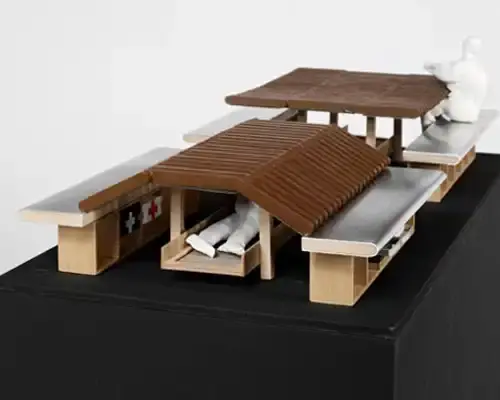
In response to the widespread critique of exclusionary tactics, a growing movement in urban design seeks to create spaces that are explicitly inclusive—what might be termed pro-homeless architecture. Rather than simply preventing the use of space by homeless populations, these design approaches aim to recognise their presence and incorporate features that ensure access, safety, and dignity.
Key Features of Inclusive Design

Welcoming Public Furnishings:
Benches and seating arrangements are designed to be comfortable and open-ended; instead of segmented pieces, they often incorporate communal seating that invites people to relax.
Multi-Purpose Spaces:
Designing areas that can adapt to varied uses—rest, socialising, temporary shelter—helps foster a sense of community. For instance, bus stops with integrated heating solutions, modular seating, and weather protection can serve as a dignity-enhancing respite in cold climates.
Accessible Urban Amenities:
Ensuring that basic facilities—clean water, public restrooms, safe lighting, and shelter information kiosks—are available and well-maintained signals a commitment to all citizens. Some cities have integrated warming areas or transitional shelter zones in busy transit areas.

Community-Informed Public Spaces:
Including the voices of grassroots organisations and individuals experiencing homelessness in urban planning decisions leads to designs that align with real needs rather than perceived inconveniences.

Homelessness is a multifaceted issue that requires compassionate and comprehensive solutions. While anti-homeless architecture may offer temporary relief for urban planners, it ultimately fails to address the root causes of homelessness and undermines the principles of inclusivity and human dignity. By prioritising supportive measures and inclusive design, cities can create environments that uplift all members of the community, fostering resilience and empathy in the face of adversity.


Comments