Logging Off - Digital Fatigue

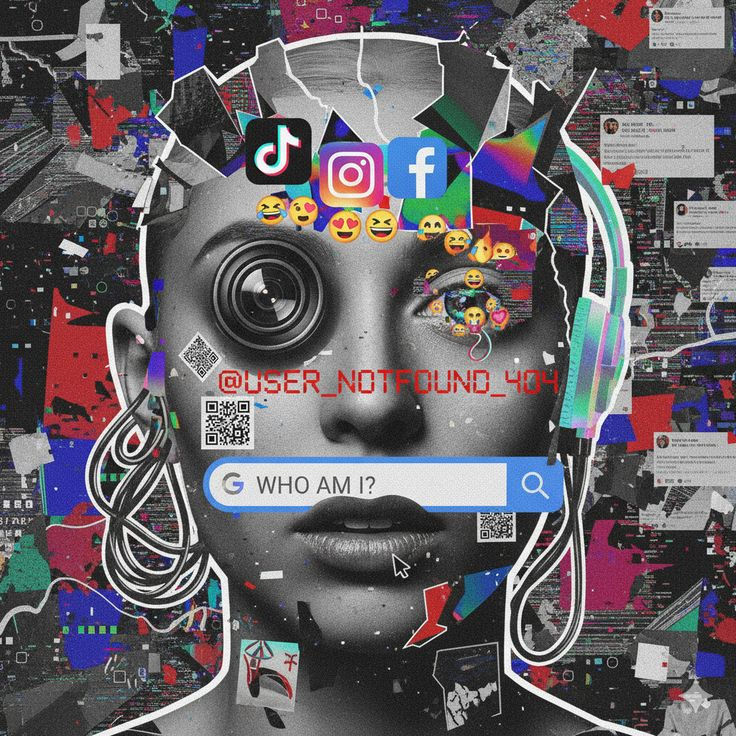
Influencers would influencer culture build an empire on attention. Rage bait built a second empire on top of that. Now the audience is exhausted, the gender wars have become a content format, and a generation raised online is quietly logging off.
In the mid-2010s, a bargain was struck between social media platforms and the people who performed their lives on them. The platforms would provide reach, discovery, and eventually money. The performers (content creators), who would be infamously known as influencers, would provide content. The audience would provide attention, engagement, and the emotional labour of caring about strangers. For a few years, the arrangement felt vaguely equitable. Then the content became rage. Then the rage became a format. And somewhere in the early 2020s, the audience began to slowly catch on and then slowly started logging off.
'Influencer fatigue', describes the exhaustion produced by overexposure to performative digital personas. Critics identified the phenomenon as early as 2018, when the first generation of lifestyle influencers began losing audience share to a combination of authenticity fatigue, saturation, and the rising costs of the aspirational content their audiences had initially loved. But the fatigue of 2024 and 2025 is a different animal. It is not primarily a fatigue with beauty routines and sponsored holidays. It is a fatigue with anger, with the industrialisation of ideological conflict as entertainment content, and with the genre of creator who has built a career not on aspiration but on provocation.

The Attention Economy at War
To fully understand the digital fatigue which we are living in right now, we have to understand digital terms that have been coined through navigating the social media and broader internet landscape.
Rage bait: content engineered to provoke anger, designed to travel through outrage rather than agreement. The emotional equivalent of clickbait.
Influencer fatigue: the exhaustion from overexposure to performative online personas – accelerated when those personas are monetising ideological conflict.
The gender wars: the broad cultural and online conflict between feminist-adjacent progressive discourse and reactionary masculinity movements.
Softmaxxing the discourse: the practice of presenting ideologically extreme positions in palatable, wellness-adjacent aesthetics to reach broader audiences without triggering moderation.
Doomer scrolling: the updated successor to doomscrolling, is characterised by consuming conflict content not out of urgency but out of habituated emotional dependency.

How rage became Content
To understand influencer fatigue in its current form, it helps to understand how the content landscape shifted between 2019 and 2023. The early influencer economy was organised around aspiration: travel, beauty, fitness, food, interiors. These are not morally neutral categories, as we have well established in articles like The Fashion of Opression and Girl Core; they carried embedded ideologies of consumption and body image that critics rightly identified and challenged, but they were aspirational rather than adversarial. The audience was being sold a lifestyle, not an enemy.
As more creators entered the aspirational content creation sphere, competition for attention intensified, and the tech companies, social media sites and algorithms were optimised for engagement rather than wellbeing. Rewarding content that provoked strong emotional reactions. Anger and moral outrage produce stronger engagement signals than admiration or aspiration. Thus, there is an increase in racially provocative content from white supremacist influencers and bots on all social media platforms, particularly Twitter, now named X by white supremacist owner Elon Musk. Creators who discovered this, whether by accident or design, found their reach expanding in direct proportion to their willingness to be provocative. The market was selecting for conflict.
The years between 2016 and 2020 produced a cultural polarisation in the English-speaking world that was without recent precedent in its intensity and speed. The collision between progressive politics (focused on gender, race, identity, and institutional power) and reactionary politics (focused on cultural displacement and anti-elite resentment). Both sides had genuine grievances, genuine intellectual traditions, and genuine stakes. Both sides also had enormous audiences that were primed to engage with content that validated their worldview and demonised its opposite. The tech companies noticed.

"The algorithm does not know the difference between the feminist creator and the manosphere creator. It sees two producers of high-engagement conflict content, and it rewards them equally."
By 2020, the infrastructure for monetising an audience by means of brand deals, Patreon, Substack, YouTube AdSense, TikTok Creator Fund, and merchandise was sufficiently developed that ideological content creators could build sustainable careers from the conflict economy. The Fresh & Fit podcast, hosted by Myron Gaines and Walter Weekes, built its viewership on conflict and high-tension debates. Their "after hours" episodes regularly feature heavily structured, adversarial, and confrontational discussions about gender dynamics, modern relationships, and traditional masculinity. They were not selling stimulating conversation and groundbreaking interviews but outrage, and for the audience the outrage was bottomless.

The gender wars as content format
Of all the ideological conflicts that migrated into the influencer economy, the gender wars proved the most durable and the most lucrative. Gender is simultaneously one of the most fundamental axes of human social organisation and one of the most personally felt. Content about what men and women owe each other, about the distribution of power and suffering between them, and about whether the current arrangements are just and who they serve touches almost everyone, generates intense emotional responses, and is almost infinitely renewable as a content topic because the underlying questions are genuinely unresolved.
On one side: progressive feminist and gender-critical content creators making content about male entitlement, the patriarchy, toxic masculinity, and the various ways institutional and interpersonal power disadvantages women. On the other hand, manosphere-adjacent, red-pill, and conservative creators making content about male disposability, feminist overreach, the crisis of masculinity, and the ways progressive culture has abandoned or demonised men. For example, self-proclaimed misogynist and manosphere content creator Andrew Tate found success within the redpill content market in 2022 and was able to leverage his internet notoriety to mainstream media by appearing on the massive reality show Big Brother. Both sides understood, at some level, that their content performed best when it was not talking to the other side but about them – using the opposition as a foil, a villain, a source of outrage to harvest.

MAGA VS Woke
The political divergence between Woke and MAGA cultural frameworks supercharged this dynamic. Progressive creators found that anti-MAGA content and conservative politics as an existential threat to women, LGBTQ people, and minorities performed extremely well with their audiences. Conservative creators found that anti-woke content, which frames progressive culture as an assault on common sense, traditional values, and male dignity, performed equally as well. Neither side needed to make the other's best argument or engage with the genuine complexities of the other's position. They needed to make the other side look frightening or ridiculous. The algorithm would do the rest.
A feminist creator with no manosphere villain has no content. A red-pill creator with no feminist overreach to document has no content. They were all collaborators in a shared creator economy of mutual antagonism.
The architecture of exhaustion
Fatigue, in this context, is a specific psychological response to a specific kind of manipulation – the repeated activation of the threat-response system without resolution or relief. Rage bait works on the same neurological principle as any other anxiety-sustaining content: it creates arousal, delivers a partial reward through the expression of outrage, and then resets to deliver the next stimulus. Over time, the arousal threshold rises and the reward diminishes (https://therapygroupdc.com/therapist-dc-blog/the-psychology-of-rage-bait-why-your-brain-cant-resist-clicking/). The audience needs more provocation to feel the same response and simultaneously begins to associate the platforms delivering the provocation with a general sense of stress and depletion.
The specific exhaustion produced by gender-war content has an additional dimension: it is a proxy war. Most viewers of feminist content calling out male entitlement are not themselves confronting the men being described. Most viewers of manosphere content railing against feminist overreach are not themselves in the institutional settings being described. They are watching representations of a conflict, responding emotionally as if they were participants, and receiving none of the resolution that actual confrontation sometimes provides. The rage is rehearsed endlessly without being expended. This is psychologically costly in a way that even conventional doomscrolling is not. (https://therapygroupdc.com/therapist-dc-blog/the-psychology-of-rage-bait-why-your-brain-cant-resist-clicking/)
Influencer fatigue is not primarily about disliking influencers. It is about the body's gradual rejection of a stimulus that was never providing what it promised. The promise of political content was understanding, validation, and solidarity. What it delivered was recurring activation of the stress response, a sense of permanent embattlement, and the vague suspicion that someone was profiting from keeping you angry.

The creator economy catches up with itself
The audience exhaustion is now visible in the metrics. Watch time on long-form gender-politics content on YouTube has been declining since. (Prajit T. Rajendran: Shorts on the Rise: Assessing the Effects of YouTube Shorts on Long-Form Video Content). TikTok's internal research, portions of which became public through regulatory proceedings, reportedly identified political conflict content as a primary driver of what the platform termed "negative emotional states" associated with churn. Users who report feeling worse after using the platform are reducing their usage. According to Colorado Arts and Sciences Magazine, the political content of TikTok did not change their political view but did alter their mood in a negative way.
For creators who built their audiences on gender-war content, the moment of reckoning has arrived unevenly. Some have pivoted towards more sustainable formats if the audience trusts them enough to follow. Others have raised the intensity of the provocation in an attempt to recapture declining engagement, which tends to produce diminishing returns and occasional platform penalties. A significant number have experienced what the industry calls "audience decay" – the gradual erosion of a following that was never attached to the creator as a person so much as to the emotional experience the creator reliably delivered. When the emotional experience becomes too costly, the audience leaves.
The particular vulnerability of rage-bait creators is that their value proposition is entirely dependent on the audience remaining angry. An audience that has processed its anger, or found healthier outlets for its ideological commitments, or simply grown tired of the format has no reason to stay. Aspirational content can evolve with its audience. Conflict content cannot easily evolve away from conflict.

What the exhausted audience is doing instead
The post-fatigue landscape is still forming, but its contours are visible. Across demographics, there is a measurable migration away from high-engagement political content toward "calm content", "slow media", and "apolitical entertainment". Cooking content, gardening, crafts, chess tutorials, and nature footage. The appetite for content that does not ask anything of the viewer's threat-response system is, apparently, considerable. This has also spawned the “Rest is Resistance” movement that has been adopted by most liberal, left-leaning people. To find out more about Rest as a form of resistance, read Rest Is Resistance: A Manifesto by Tricia Hersey.
Among younger audiences, a generation that grew up entirely within the influencer economy with no prior reference point for media consumption without it – the shift is more ambivalent. There is no clean exit from a media environment you have been embedded in since childhood, and the algorithmic architecture that delivered rage bait also delivers genuine community, creative work, and emotional sustenance. The move is not away from social media wholesale but towards a more intentional curation of experience within it: following fewer accounts, engaging with less comment-section conflict, and preferring long-form or niche content over the viral feed optimised for maximum engagement.
Whether this represents a genuine structural shift or a temporary fatigue cycle. The platforms have powerful incentives to reactivate engagement, and the political conditions that fuelled the gender-war content economy have not resolved. The underlying conflicts about gender, power, and cultural belonging are real, regardless of how cynically they have been monetised. They will continue to generate content, and that content will continue to find audiences. The question is whether those audiences will be as large, as loyal, and as reliably activated as they once were.

Comments