Austerity Urbanism: South African Architecture and Infrastructure Under Austerity

Updated: Mar 28
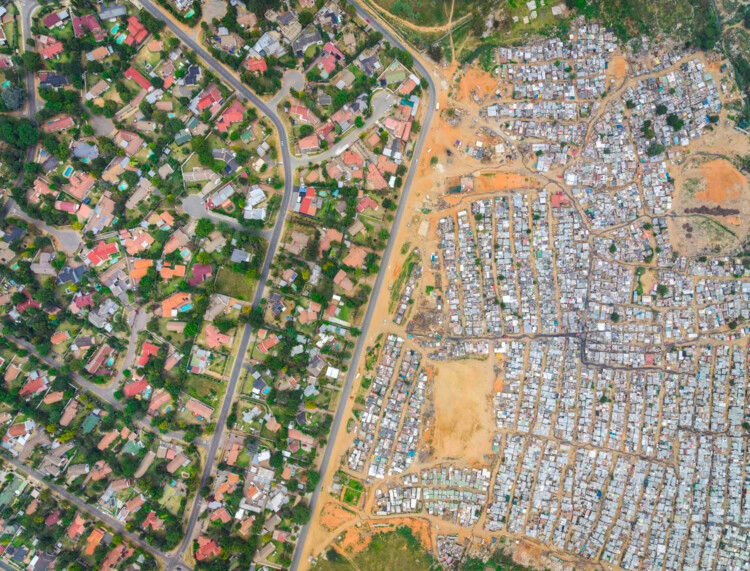
'Austerity urbanism' refers to the post-2008 era of urban governance characterised by severe budget cuts, public service privatisation, and reduced local government spending. It downloads fiscal crises to municipalities, leading to diminished public services, infrastructure decline, and the reliance on community-led, temporary, or private-sector-driven development solutions.
Core Impacts of Austerity on Architecture
Capacity Reductions
Planning departments have faced significant budget and staffing cuts (e.g., a 40.8% decrease in some regions), leading to severe skills shortages in urban design. Austerity has led to a reduction in public services, specifically hitting healthcare, education, social welfare, and regeneration programmes. This means that state infrastructure such as hospitals, clinics and schools are not recieving the funds they need to expand capacity.
In South Africa, capital expenditure has declined by 42% since 2016. Public corporations curtailed their spending from R90 billion in 2019 to R76 billion in 2020. The decline in 2020 was largely attributed to Eskom, which reduced spending across all capital expenditure types. (Department of Statistics South Africa).
Infrastructure Dilemma
The infrastructure dilemma arises as cities must manage ageing infrastructure, satisfy growth demands, and improve sustainability but lack the public funds to do so, leading to a reliance on private investment, speculative development, and "revolving door" politics - this refers to the movement of individuals who occupy roles in the private sector and roles as public officials. While governments aim to reduce construction and life-cycle costs by up to 33%, there is a growing need for major strategic investment in energy, transport, and climate resilience.
Public-sector capital expenditure has steadily waned since 2016, declining by R82 billion. This represents a decrease of 29%, according to Stats SA’s latest Capital Expenditure by the Public Sector report. (Department of Statistics South Africa).
Public-sector institutions spent about the same amount of money on fixed assets in 2020 as they did in 2012. In 2020, public corporations accounted for the bulk of public-sector capital expenditure (38%), followed by municipalities (27%) and provincial governments (16%). Higher education institutions contributed the least (3%). These budget cuts are implemented as a means to hit the goals of reducing costs.
Shift in Values
When austerity is applied to urban architecture, public infrastructure design is increasingly judged on its instrumental economic potential, such as using heritage or public realm improvements as soft factors to attract tourism or knowledge-based industries. Urban interventions are prioritised based on their return on investment, often focusing on high-value real estate development, flagship projects, and place-marketing over public amenities.

Many state-owned enterprises have been completely sold or partially sold to private companies; this includes the likes of Transnet (logistics network): While remaining a state-owned entity, Transnet has begun opening its rail network to private third-party investments to mitigate severe logistics inefficiencies, an act often described as back door or partial privatisation. Eskom Electricity Supply (Renewables): The government has invited private companies to invest in and compete for contracts to produce renewable energy as part of a restructuring of the electricity sector. Telkom SA Ltd: In 1997, 30% of the state-owned telephone monopoly was sold to Thintana Communications (a consortium of SBC Communications and Telekom Malaysia). It was later listed on the JSE in 2003, with the state retaining a minority stake, making it a public company.

South African Airways (SAA): In 1998, 20% of the national carrier was sold to a private company. In 2021, the government agreed to sell a 51% stake to the Takatso Consortium, which includes Global Airways and Harith General Partners, making the airline majority private. SAFCOL (South African Forestry Company Limited): Privatised in 1999, involving the sale of several state-owned forestry assets to private companies. Sasol: Originally established as a state-owned entity in 1950, Sasol was partially privatised in 1979 and fully privatised by the early 2000s.
These methods of privatisation occur through a variety of strategies, such as strategic equity partners: selling stakes in State Owned Entreprises (SOEs) to private entities, as seen with the likes of SAA and Telkom. Initial Public Offerings (IPOs): Listing state companies on the Johannesburg Stock Exchange, much like Telkom and Sasol. Contracting Out: Contracting private firms for services such as refuse disposal or municipal functions
Emerging Risks
Design Quality Erosion
Constant pressure to cut costs can quietly lead to lower quality standards or the neglect of post-occupancy evaluations. Cuts to local authority budgets have led to a significant loss of planners and in-house urban design expertise. There is also a dominance in standardised and formulaic design, with reduced in-house capacity to demand bespoke or high-quality design; there is a return to standardised, unadventurous house building and off-the-shelf urban infrastructure. This results in monotonous, unloved environments.
Minimalism
Minimalism can exist without austerity, as people can choose the type of design they want to engage with – the ability to choose how an individual wants to live. However, austerity demands minimalism from its designers. Minimalist design is used as a way to thoughtlessly cut the costs.
Austerity leads to minimalism by forcing urban environments to prioritise functionality, sustainability, and stripped-down aesthetics over excessive consumption and grand infrastructure. This process manifests as both a forced reduction in resources and a proactive, community-led shift towards more intentional, compact living.
Modernism
The goal of modernism was to make the important things cheaply available for everyone. Austerity urbanism leads to modernism, or more precisely, a revival of modernism’s functionalist principles, by creating a necessity for functional efficiency, cost-effective design, and technocratic governance. In times of crisis, the state's withdrawal forces cities to embrace "lean" urban development, mimicking modernist imperatives to do more with less. Austerity urbanism and the makeshift city, Fran Tonkiss, 2013
Austerity encourages responsibilisation - where states shift responsibility for social risks, safety, or welfare from public institutions to individuals, communities, or private actors. Local governments must innovate or shrink. This leads to the reliance on technocratic, expert-driven solutions, often refered to as smart city agendas or infrastructure megaprojects, which are direct descendants of modernist top-down planning, ignoring complex social dynamics in favour of, supposedly, neutral technology.
Hostile Architecture
Austerity urbanism drives the rise of hostile architecture by prioritising the policing of marginalised populations over the provision of social support. As cities cut funding for social services, shelters, and public maintenance, hostile architecture becomes a cheap, defensive strategy to manage the visibility of poverty and homelessness. Austerity Urbanism: American Cities Under Extreme Economy, by Jamie Peck. 2012.
Instead of addressing the root causes of homelessness through housing, cities under austerity measures deploy tools like sloped benches, metal spikes, and dividers, which prioritise the removal of people over solving their needs.
Ornamentation is not proof of care.
The job for contemporary designers and architects has been providing modern amenities to millions of people; this demands a high level of industrialisation without accidentally killing people or collapsing the economy. It is essential to have systems that can be manufactured, installed and maintained continuously; thus, standardisation through the use of prefabricated products is less expensive than what would be aesthetically pleasing, creating a shift towards industrialised repeatability (Design Theory: The System That Punishes Beautiful Design).
Corruption

Evidence suggests a complex, bidirectional relationship where austerity can act as a catalyst for corruption, while corruption often necessitates or accompanies austerity measures. Austerity often weakens public institutions and creates conditions conducive to corruption, such as:
Weakened Oversight and Capacity
Austerity measures often involve cutting budgets for public institutions, which reduces their capacity to monitor and enforce regulations, thereby creating loopholes for corruption. The systematic reduction of municipal budgets and the offloading of fiscal responsibility from central to local government have significantly weakened the oversight, operational capacity, and democratic accountability of city governments. By imposing severe budget cuts, promoting privatisation, and reducing staff, austerity has compelled local authorities to prioritise short-term survival over long-term planning and public oversight. The Cost of Austerity: Lessons For South Africa, Institute For Economic Justice: Research Policy Advocacy. 2019
Cuts in local funding have resulted in massive staff reductions and the downsizing of municipal workforces. This loss of human capital directly reduces the technical expertise available for urban planning, monitoring public works, and contract management.
The "Grease the Wheels" Phenomenon

In environments with severe economic, political, or budgetary constraints, officials with low salaries may be tempted to solicit bribes (petty corruption) to supplement their income, or large-scale corruption (grand corruption) may increase as elites scramble for shrinking state resources.
The rise of the tenderpreneur has been the downfall of South African service delivery. A tenderpreneur is a portmanteau of “tendering” and "entrepreneur" and describes a person within or outside government who abuses their political power or influence to secure government tenders and contracts. Today, ‘tenderpreneurs’ are associated with corruption, nepotism and clientelism. This is because the award of many tenders is driven by informal interests and political affiliation, rather than the requirements of formal procedure. The informality of ‘tenderpreneurship’ thus resides in these extra-legal social and political relationships (Piper, Laurence; and Charman, Andrew). Tenderpreneur (also tenderpreneurship and tenderpreneurism), 2018.
The ANC political party has been associated with grand corruption on a consistant basis, as memebers of the party both on a local and legislative role have been found with their hand in the cookie jar. Criminals and tenderpreneurs have implicated members of the party who hold public office in many grand corruption scandals.
Privatisation and Outsourcing Risks

Austerity often leads to the privatisation or outsourcing of public services, which can increase risks of corruption in the procurement process.
For instance, the construction mafia are organised criminal groups in South Africa that infiltrate construction projects, both private and public, using extortion, intimidation, and violence to demand a stake in the work, often demanding 30% of the project's value. These groups, sometimes operating under the guise of local business forums or community interest groups, they have significantly disrupted infrastructure development, caused massive cost overruns, and deterred investment.
Erosion of Trust
Austerity policies, by reducing public services and worsening inequality, can erode public trust in government, which is a key factor in increasing tolerance for or participation in corrupt activities. According to Marcia Moyana, the practice of reducing public expenditure and downsizing government services at the local level, often in response to financial crises, erodes trust by dismantling the social contract, increasing social inequality, and creating a perceived gap between state accountability and citizen needs. This approach typically prioritises market-based solutions over social welfare, leading to the displacement of vulnerable populations and a breakdown in public confidence. Marcia Moyana: The erosion of trust (https://www.wsg.ac.za/news/erosion-trust#:~:text=%E2%80%8B%E2%80%8B%E2%80%8BGendered%20governance%E2%80%8B%E2%80%8B&text=She%20says%20that%20gender%20should,concerns%20%E2%80%93%20%E2%80%8Bfurther%20erodes%20trust.)

By enforcing austerity, local governments scale back services, which signals to residents that the state is unwilling or unable to protect them, undermining the fundamental trust in government to provide for its citizens. Austerity measures often involve shifting to localised, welfare chauvinism regimes, where social housing and benefits are restricted or conditional, displacing residents deemed "undeserving", often the poor. The reduction of housing benefits and privatisation of services can lead to the displacement of residents from their communities, separating them from support networks.
Austerity encourages neoliberal strategies like city branding, public-private partnerships, and privatisation. These strategies often prioritise corporate needs over resident needs, leading to distrust in the fairness and integrity of decision-makers. As governments become "entrepreneurial", shifting risks to the public while providing fewer services, the accountability of city leaders diminishes. The resulting "weak regulation" and poor governance. While austerity often calls for "community-led" development to fill service gaps, it can be viewed by residents as an attempt to shift responsibility to the public rather than a genuine empowerment effort, leading to scepticism and disengagement. Marcia Moyana: The erosion of trust (https://www.wsg.ac.za/news/erosion-trust#:~:text=%E2%80%8B%E2%80%8B%E2%80%8BGendered%20governance%E2%80%8B%E2%80%8B&text=She%20says%20that%20gender%20should,concerns%20%E2%80%93%20%E2%80%8Bfurther%20erodes%20trust.)
The "Class Project" Argument
The class project argument posits that austerity urbanism is not a neutral economic necessity but an ideological and targeted project that shifts the burden of crises onto vulnerable populations while protecting elite interests, essentially operating as a top-down class war. Austerity is a deliberate policy that serves the interests of a "predatory elite" at the expense of public service delivery, making corruption a systemic feature of the economic model rather than just an anomaly.

For example, as of November 2025, investigations are ongoing into an R17.4 billion rail signalling tender awarded by PRASA to Maziya General Services, with reports alleging fraudulent payments and failure to meet bid criteria. The Swifambo Rail Leasing contract saw PRASA spend billions on Spanish locomotives that were too high for South African infrastructure. In February 2016 the National Treasury, in compliance with Madonsela’s recommendations, commissioned investigations into 216 contracts awarded by Prasa between 2012 and 2015. Of these 216 contracts worth around R15 billion, only 13 were found to be above board. In 2022, then-Transport Minister Fikile Mbalula revealed that over 3,000 "ghost workers" were on the PRASA payroll, with management negligence enabling widespread corruption. In February 2016 the National Treasury, in compliance with Madonsela’s recommendations, commissioned investigations into 216 contracts awarded by Prasa between 2012 and 2015. Of these 216 contracts worth around R15 billion, only 13 were found to be above board.

The independent investigations revealed a staggering level of corruption at Prasa. Taken together, they indicate that Prasa had been captured by private interests determined to drain the coffers of the already faltering rail agency. The reports and court judgements indicate that these private interests were protected and enabled within Prasa, namely by the ex-CEO Montana and the board under the chairmanship of Sfiso Buthelezi. (Daily Maverick: How Prasa was looted and left for scrap)
Permanent Austerity
Austerity urbanism becomes a permanent fixture and a systemic problem when emergency financial responses to crises (like the 2008 crash) are transformed into long-term, routine urban policy, effectively replacing the welfare state with market-driven, "lean" local governance. This shift entrenches inequality, reduces public services to minimal levels, and downloads financial risks onto residents and marginalised communities. Jorge Afonso de Almeida Rios: Austerity Urbanism: From Redistributive Transfers to Debt-Based Finance (2023).

Permanent urban austerity in South Africa is characterised by the systemic, long-term underfunding of municipal services, the normalisation of infrastructure decay, and the spatial marginalisation of the poor. A core example is the state’s inability to adequately house millions, resulting in a permanent reliance on informal settlements (shanty towns) and backyard dwellings that lack basic services. These are, in effect, "permanent temporary" structures of urban poverty.
Areas like Hillbrow, Berea, and Joubert Park in Johannesburg exemplify permanent austerity, where infrastructure maintenance has ceased, leading to building hijacking, massive disconnections of water and electricity, and a breakdown of public services.
The failure to address apartheid spatial planning means low-income families remain trapped in the outskirts of cities, far from jobs, due to persistent spatial inequities and a lack of investment in well-located public housing.
Coupled with the frequent failure of basic infrastructure such as water, sanitation, electricity, and roads due to chronic budget cuts, which are no longer treated as an emergency but as a permanent condition.
Survival & Innovation Strategies
Experimental Asset Management
In South Africa, municipalities are legally required to involve communities in the development of their IDP, which dictates infrastructure planning, ensuring community needs are prioritised in project implementation. Some cities are moving toward partnerships with citizens to manage public buildings, leveraging local political capacity when formal resources are scarce. Ward committees are meant to act as a bridge between city governance and citizens.
Value Engineering

Architects now prioritise modular and prefabricated methods, which can reduce project durations by 50% and costs by 20%. Prefabricated modular buildings are used extensively by government departments for rapid, cost-effective classroom expansion, including projects like the Uitsig Primary School in Tshwane. These are often completed up to 60% faster than conventional building methods.
The healthcare and clinic facilities use prefabricated units for rapid deployment of clinics, such as the Men's Health Clinic in Mamelodi, Gauteng. These provide essential health services in remote or under-serviced areas with accelerated construction times.
Low-Cost Public Housing: Prefabricated housing initiatives in Gauteng, Cape Town, and other regions use modular panels to address high housing demand in townships. These offer a housing solution to the informal settlement housing crisis.

Technological Integration
The use of budget management and real-time data tools (e.g., Payhawk) is becoming standard to prevent cost overruns. Technological integration is often used as a mechanism to handle reduced budgets, utilizing ICTs (Information and Communication Technologies) to enhance the efficiency of municipal services like waste management, traffic, and energy. Urban problems are also rebranded as technological problems requiring algorithmic solutions, reducing complex political issues to technocratic management. Cities under financial constraints lean on tech giants to manage infrastructure, often through Public-Private Partnerships (PPPs).
Austerity Urbanism
Due to constraints on large-scale public funding, austerity urbanism often promotes temporary, tactical urbanism and low-cost design solutions to activate vacant spaces, acting as a form of "durability through the temporary". This involves "makeshift" city practices: temporary uses of under-used land, low-cost leases, and community-led planning that bypasses conventional, expensive development models
According to Scape Magazine, makeshift and temporary interventions in South African austerity urbanism, such as informal settlement upgrades, tactical urbanism, and community-led infrastructure, serve as crucial, rapid-response survival mechanisms to address state service delivery gaps. These localised, bottom-up interventions in Durban and elsewhere create resilience and "third space" solutions, bridging formal, slow-moving urban planning with urgent daily livelihood needs. Tactical Urbanism: Creating Appropriate Street Furniture: (https://scapemagazine.co.za/tactical-urbanism-creating-appropriate-street-furniture/#:~:text=Tactical%20urbanism%20is%20a%20form,test%20the%20more%20successful%20designs.)
In cities like Durban, "zones of awkward engagement" - spaces where global forces, cultures, or policies interact with local realities, creating frictions, misunderstandings, and unpredictable, often uncomfortable, outcomes - emerge where the community, NGOs, and the state collaborate on temporary solutions to service provision and environmental management (ScienceDirect.com).

Comments